LinkedIn Connection Request Message: What Works in 2026
LinkedIn connection request message guide for 2026: the note paradox, the 120 to 180 character sweet spot, and the acceptance rate math that gates volume.
The LinkedIn connection request message is 300 characters that decide whether outreach on the platform exists at all, and in 2026 it carries a paradox the templates never mention: the large datasets disagree about whether to write one. One 80,000 request analysis found blank invites accepted at 55 to 68 percent against 28 to 45 for invites with notes, while other studies report personalized notes accepted at 45 to 70 percent against 15 to 29 for generic ones, and both are measuring the same platform. The resolution is that note quality is the hidden variable: a templated or pitchy note performs worse than silence, because the format itself now signals automated selling, while a specific, contextual, zero pitch note still beats everything. The honest rule for 2026: a blank request beats a bad note, and a real note beats a blank request.
The stakes are bigger than one prospect, because the acceptance rate is also an account health input. Below roughly 30 percent acceptance, LinkedIn throttles your sending volume under the standard 100 requests a week, recipients clicking I don’t know this person cut your trust score directly, and profiles that let hundreds of pending requests rot get read as mass inviters. Every bad note therefore costs twice: the prospect it loses and the future volume it burns, which is the same reputation economics that governs email in how many cold emails per day, running on a different platform.
This piece is the craft layer under our LinkedIn coverage: the channel strategy lives in linkedin outreach, the budget decision against email in cold email vs linkedin outreach, and the targeting engine in how to use linkedin sales navigator for prospecting. Here we cover the note itself: when to send one, what goes in it, and the account mechanics around it.
The note or no note decision, settled by context
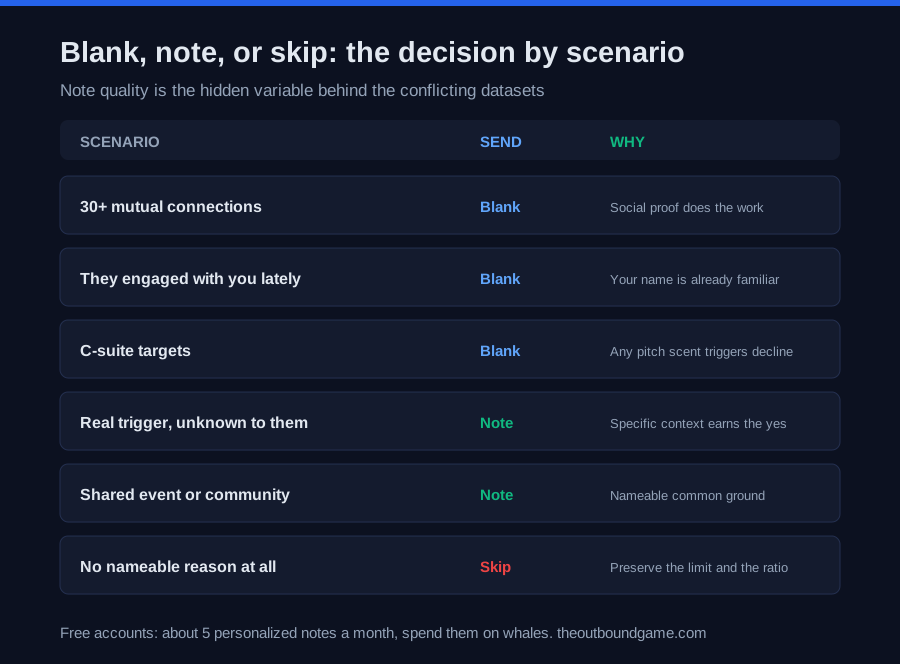
Send a blank request when the context speaks for itself: 30 plus mutual connections in the same niche, repeated recent engagement with their content so your name is already familiar, a headline that explains the relevance on its own, or a warm introduction that happened in another channel. Blank also wins by default at the C-suite, where acceptance rates are lowest and any whiff of a pitch triggers an instant decline, and it is the pragmatic answer on free accounts, which since the 2026 restriction get only about 5 personalized notes a month, making each one a rationed asset for the highest value targets.
Write a connection note when you have a real trigger and the recipient has no reason to recognize you: a post they published, a job change, a funding round, a shared community, a mutual connection worth naming. The evidence on specificity is consistent even where the note debate is not: specific references outperform vague ones by around 42 percent, mutual connections lift acceptance 20 to 55 percent, and the generic openers everyone recognizes, the professional network line, the we’re both in SaaS line, are the exact patterns that make notes lose to silence. If you cannot name the specific reason for this specific person, send blank or do not send.
The LinkedIn connection request message anatomy, in three parts
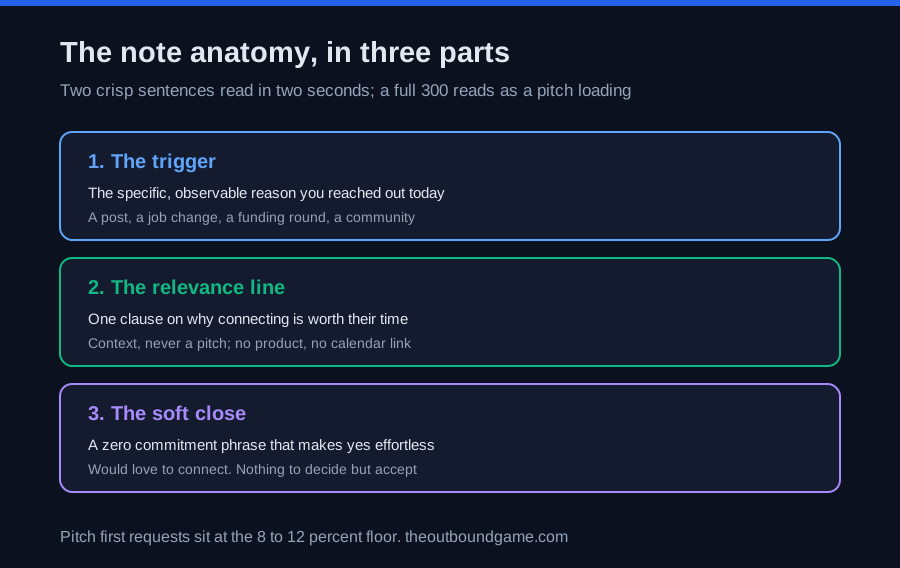
The character limit is 300 characters on every plan, spaces and emojis included, and the sweet spot sits well under it: notes of 120 to 180 characters outperform notes that fill the limit, because two crisp sentences read in two seconds while a wall of text reads as a pitch loading. The working anatomy has three parts. The trigger: one sentence naming the specific, observable, obviously true thing that made you reach out today. The relevance line: one brief clause on why that trigger made connecting worth their time, context rather than pitch. The soft close: a zero commitment phrase, would love to connect, worth reaching out, nothing that requires a decision beyond accept.
What never goes in: the pitch, the product, the calendar link, or the help companies like yours formula, because the connection request has exactly one job, getting accepted, and the conversation belongs to the DMs afterward. This is the same single job discipline as the cold email word budget, compressed harder: per LinkedIn’s own guidance the invitation exists to establish the relationship, and the 2026 data is blunt about violations, with pitch first requests accepted at 8 to 12 percent, the floor of every dataset. Personalization here means the trigger is real, not that the name is merge filled, the same distinction that governs how to personalize cold emails at scale.
The account mechanics: limits, timing, and hygiene
The volume rules are the invisible half of the craft. The baseline is roughly 100 connection requests a week, stretching to 150 to 200 for aged, active accounts with strong acceptance rates and shrinking to about 50 for profiles under three months old; requests spread across weekdays beat bursts, and the automation tier, where used at all, must mimic that human rhythm because the platform bans the alternative. Timing follows the professional mindset, and per HubSpot’s social selling research the pattern holds across datasets: Tuesday through Thursday, 8 to 11 AM in the recipient’s time zone, outperforms consistently, Mondays drown in inbox overload, Fridays check out early, and weekend requests sit buried until Monday, which matters because 63 percent of acceptances happen inside the first 24 hours of visibility.
Hygiene closes the loop: withdraw pending requests after about 7 days, since a stale invite is dead weight and a pile of them signals mass inviting, keep total pending requests well under 500, and accept that a withdrawn prospect cannot be re invited for roughly three weeks, which makes targeting discipline cheaper than volume. Track the acceptance rate weekly by segment and template cohort, above 50 percent means targeting and message are aligned, 30 to 40 is workable, and below 25 to 30 is a targeting problem wearing a copy problem, per the same diagnostic logic the reply rate guide applies to email.
Five LinkedIn connection request message mistakes to avoid
-
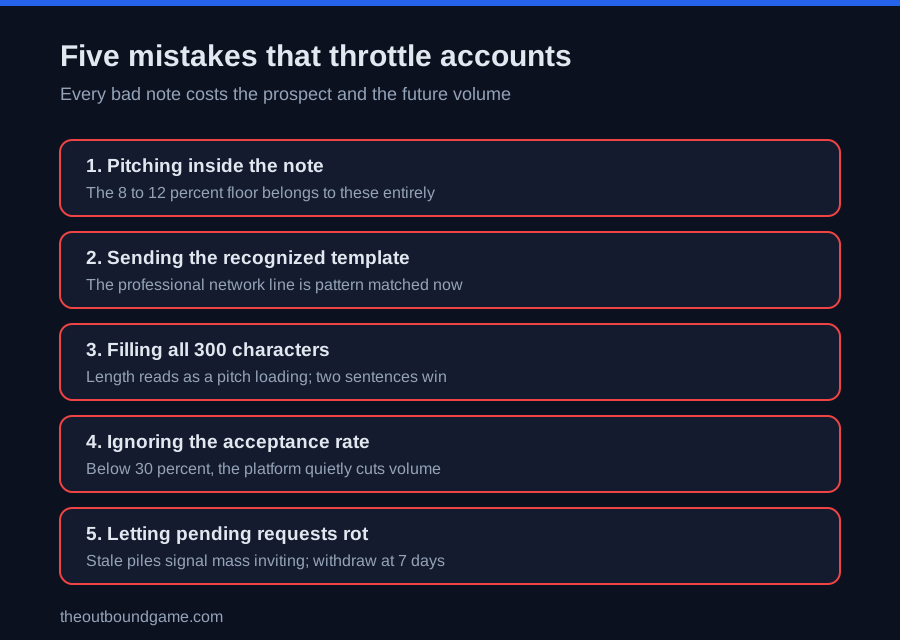
Pitching inside the note. The 8 to 12 percent acceptance floor belongs entirely to help companies like yours messages. The request has one job, and selling is not it.
-
Sending the template everyone recognizes. The professional network line and the both in SaaS line are pattern matched by humans now. Recognized template equals instant decline.
-
Filling all 300 characters. Length reads as pitch. Two sentences at 120 to 180 characters win the two second glance the note actually gets.
-
Ignoring the acceptance rate. Below 30 percent, the platform quietly cuts your weekly volume. The metric is infrastructure, not vanity.
-
Letting pending requests rot. Hundreds of stale invites signal mass inviting and cap future sends. Withdraw at 7 days, every week.
The eight step connection request system
-
Target inside the ICP only. Every request spends the weekly limit; a mismatch wastes it twice, per the list discipline in how to build a b2b prospect list and the verified contact data platforms like Apollo provide.
-
Run the would they want to hear from me test. A probable ignore is a skipped send, preserving both the limit and the ratio.
-
Decide note or blank by rule. Blank for the recognizable, the C-suite, and the free account overflow; a note only for genuine, nameable context.
-
Write the three part anatomy in 120 to 180 characters. Trigger, relevance, soft close, zero pitch, per the formulas above.
-
Send Tuesday to Thursday mornings in the recipient’s time zone, spread through the week under the account’s current limit.
-
Withdraw at 7 days and log the cohort. Acceptance rate by segment and template, reviewed weekly against the 30 percent floor and 50 percent target.
-
Follow acceptance with patience, not a pitch. A short expectation free thanks, then 2 to 3 genuine content engagements before any ask, feeding the DM craft in linkedin outreach.
-
Slot the whole motion into the cadence. The connection request is day zero of the two channel skeleton in cold email vs linkedin outreach, timed by the sales cadence rules, one coordinated narrative per the multichannel outbound doctrine, inside the broader b2b outbound sales system.
How the connection request fits the broader outbound stack
-
It opens the channel whose craft lives in linkedin outreach, where the post acceptance conversation happens.
-
Its budget context, when LinkedIn gets the account at all, is settled in cold email vs linkedin outreach.
-
Its targets are sourced through how to use linkedin sales navigator for prospecting, accounts first.
-
Its scaled execution tier, used within platform tolerance, is compared in linkedin automation tools and dripify vs expandi.
-
Its personalization standard, real triggers over merge fields, is systematized in how to personalize cold emails at scale.
-
Its single job discipline mirrors the word budget in how to write a cold email.
-
Its place in the touch sequence is day zero of the sales cadence, the warmth before the email spine.
-
And its acceptance rate math is the LinkedIn twin of the diagnostics in cold email reply rate, infrastructure wearing a metric’s name.
FAQ
Frequently asked questions
What should a LinkedIn connection request message say?
Should you send a LinkedIn connection request with or without a note?
What is the character limit for LinkedIn connection requests?
What is a good LinkedIn connection acceptance rate?
How many connection requests can you send per week?
When is the best time to send LinkedIn connection requests?
What should you send after someone accepts your connection request?
The bottom line
The LinkedIn connection request message earns its 300 characters of attention by respecting what it is: a two second decision about a stranger, graded first by the platform’s trust math and then by a human glance. The rules compress cleanly, blank beats a bad note and a real note beats blank, 120 to 180 characters carrying a trigger, a relevance line, and a soft close, zero pitch ever, sent midweek mornings under the account’s limit, withdrawn at 7 days, and measured weekly against the 30 percent floor that guards your volume. Written that way, the request stops being cold outreach at all: it is a specific person, a real reason, and an easy yes, which was always the entire formula for getting strangers to open the door.
Want more tested breakdowns like this? We publish one honest teardown of outbound tools, tactics, and playbooks each week. Join the newsletter.
More on Outbound Strategy
Cold Email vs LinkedIn Outreach: Which Wins in 2026?
Cold email vs LinkedIn outreach in 2026: the reply rate and cost data, the volume caps, when each channel wins, and the combined sequence that beats both.
How to Start Outbound Sales in 2026 (60 Day Roadmap)
How to start outbound sales from zero in 2026: the 60 day roadmap from ICP to first meetings, the starter stack, and the metrics that prove the channel.
Multichannel Outbound in 2026: The Complete Playbook
Multichannel outbound in 2026: the channel roles, the coordinated 15 day cadence, behavior triggers, and why orchestration beats channel count.