Account-Based Marketing in 2026: An Operator Guide
Account-based marketing in 2026, explained for operators: how to tier accounts, align sales and marketing, run the plays, and measure what matters.
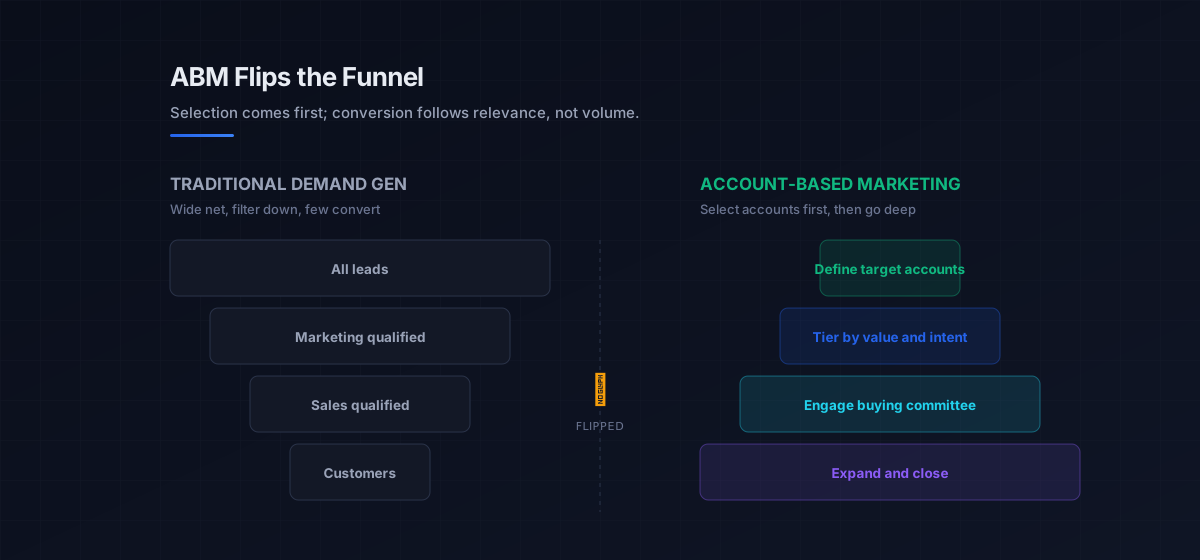
Account-based marketing flips the usual funnel on its head. Instead of generating a wide pool of leads and filtering down, you start from a short list of the companies most worth winning and concentrate sales and marketing on those specific accounts. The unit of work is the account, not the lead, and the whole motion is judged by how deeply you get into the accounts that matter rather than by how many forms get filled.
That sounds simple, and the idea is. The execution is where teams come undone. A real program is a discipline, not a tool you switch on: pick the right accounts, decide how much effort each one earns, get sales and marketing working from one list, and run coordinated plays against the buying committee until the deal moves. Most programs that disappoint did the strategy deck and skipped the discipline.
This operator guide lays out the whole motion end to end, then points to the deeper pieces for each part. It is the pillar for a cluster that includes the best abm tools, the platform-level demandbase vs 6sense comparison, the budget decision in abm vs demand gen, the execution detail in abm strategy, and the wider outbound sales motion it serves.
What account-based marketing actually is
The textbook definition is a go-to-market approach that treats individual accounts as markets of one. In plain terms, you choose a finite set of high-value companies, build a tailored plan for each tier of them, and surround the people who make the buying decision with relevant, coordinated outreach across channels.
The contrast with traditional demand generation is the point. Broad marketing casts a net to catch whoever is interested. This approach aims a spear at named companies you have already decided are worth the effort. One optimizes for volume and efficiency; the other optimizes for penetration and deal quality inside a defined list. Neither is universally better, which is exactly why the budget split between them, covered in abm vs demand gen, is its own decision.
Five principles hold every durable program together: tight focus on a short list, genuine sales and marketing alignment, real personalization, clean data, and constant iteration. Drop any one and the motion decays into expensive noise.
Who it is for, and who it is not
Account-based marketing is built for scale of deal, not scale of audience. It pays off when the average contract value is high enough to justify per-account effort, the buying cycle is long, and the decision runs through a committee rather than a single buyer. Enterprise and upper mid-market software, complex services, and high-ticket B2B are the natural home.
It is the wrong first move when you sell a low-priced product to a vast market through a mostly self-serve motion. If your total addressable market runs to tens of thousands of accounts and no single deal can fund bespoke work, you need reach, and a broad demand engine will return more per dollar. The honest test is the per-account math: divide a realistic budget by the number of companies you would genuinely surround, and if the figure cannot fund sustained, multi-channel touches, your list is too long for the model.
Building the target account list
Everything starts with the list, because effort spent on the wrong companies is wasted no matter how good the execution. A sound account-based marketing program lives or dies on this list, the same way disciplined b2b prospecting does. Build an ideal customer profile from firmographics, technographics, intent, and engagement signals, then score and rank candidate target accounts on fit and revenue potential.
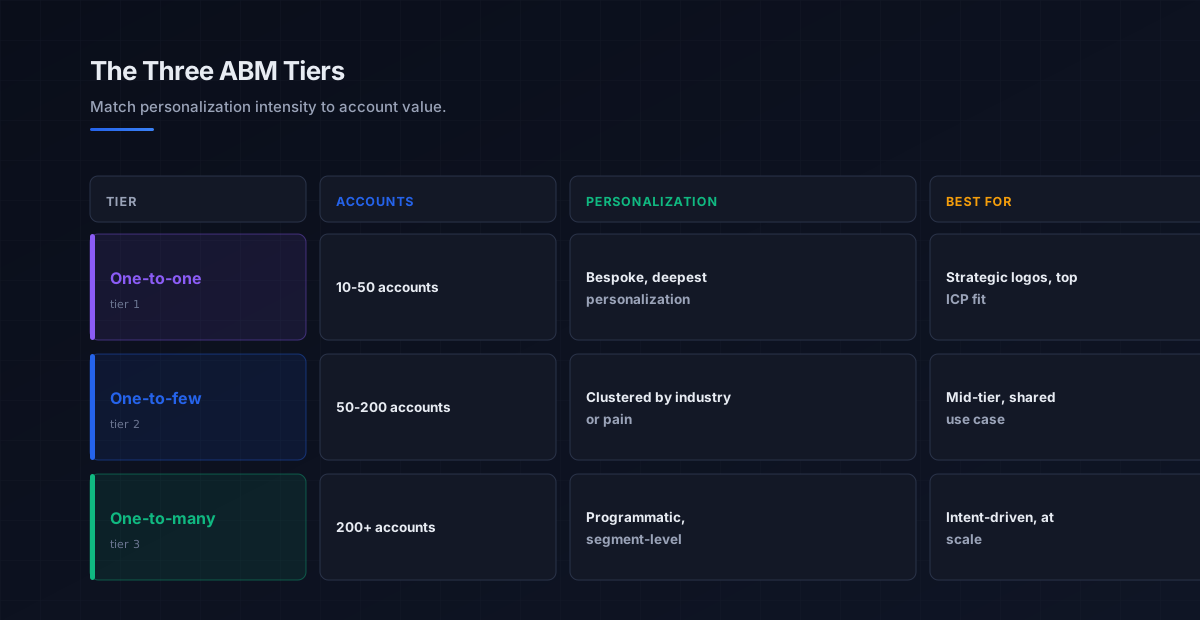
Tier the result. A handful of strategic accounts earn fully bespoke treatment, a larger set of similar companies get clustered and worked semi-personally, and a broader programmatic tier runs on rules and signals at scale. The data that feeds this selection comes from the b2b data providers and data enrichment tools layers, while the platforms that score fit and surface in-market accounts are compared in best abm tools and demandbase vs 6sense. Treat the list as living: promote a company when it starts showing buying signals, and let one go quiet without guilt.
Sales and marketing alignment
The fastest way to break a program is to let the two teams work from different lists. Sales and marketing alignment is not a kickoff meeting; it is an operating model, and it is the single biggest predictor of whether the motion produces pipeline or dashboards.
Four things make it real. One shared list that neither side changes alone. Shared definitions of what counts as a target, an engaged, and a sales-ready account, so handoffs stop being arguments. Shared metrics built on account engagement, pipeline, and revenue rather than raw lead counts. And a standing weekly sync where both teams look at the same accounts and decide who touches what next. The detailed playbook for this lives in abm strategy.
Reaching the buying committee across channels
Enterprise purchases are made by groups, so the goal is coverage of the buying committee, often six or more stakeholders inside one company, not a single champion who clicked an ad. That is an orchestration problem.
The plays that work coordinate email, LinkedIn, calling, and advertising so they land together against an account and are sequenced by buying stage. A consistent message arriving from several directions at once moves a committee far faster than any single channel hammering one inbox. Intent data routes the accounts showing real research activity to the top of the queue so reps spend their hours where timing is best. The channels themselves are covered in the cold email software, linkedin outreach, and sales engagement guides, with sequencing in sales cadence.
Measuring the program honestly
If you measure an account-based program the way you measure demand generation, a healthy program will look like a failure. Lead volume is the wrong yardstick here.
Track account penetration, meaning how many target accounts you are engaging and how many roles inside each. Track pipeline generated from the named list, kept separate from pipeline at large. Track win rate inside the list and revenue influenced. And track buying-group coverage, where a strategic account should show several engaged stakeholders rather than one. Pair the metrics with a clock that matches the deal: programmatic plays show signal in weeks, while a strategic account on a year-long cycle needs roughly that long before you judge it. The supporting sales intelligence tools and crm software layers are where these numbers actually live.
Five mistakes that sink account-based programs
What we see most often is the same handful of errors, and none of them is fixed by a bigger budget.
-
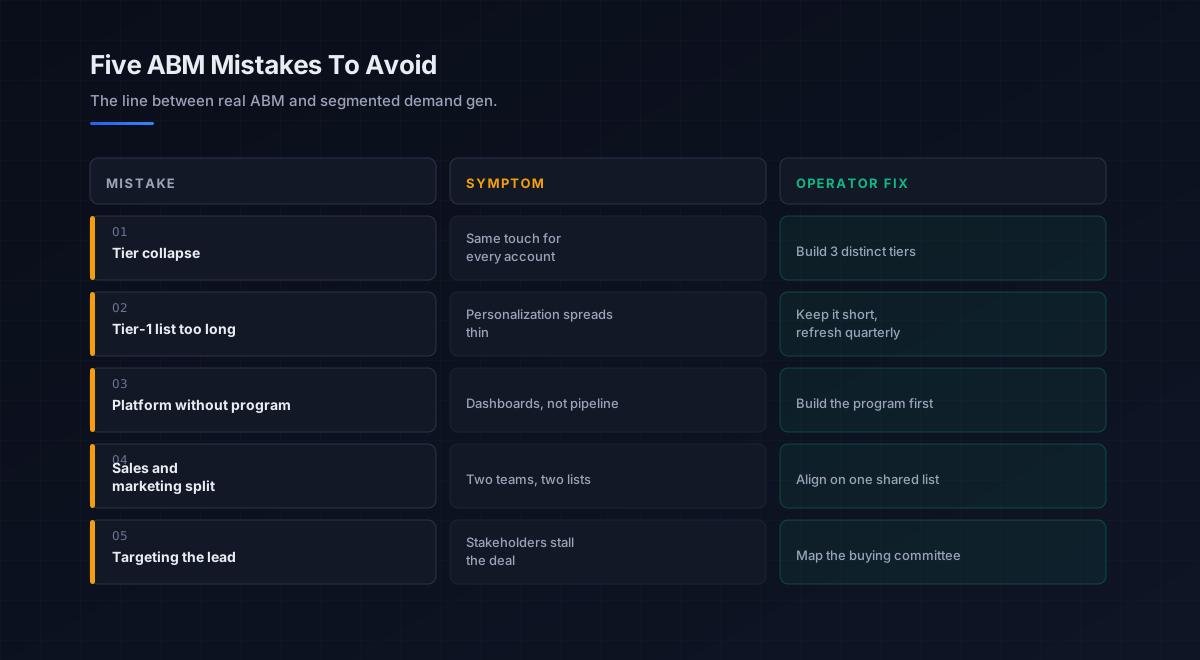
Too many strategic accounts. A list the team cannot personalize turns bespoke into templated. Cut the top tier to what you can genuinely execute.
-
Running ads at a list and calling it ABM. Impressions with no routing, coverage, or follow-up is demand generation wearing a costume. Build the workflow, not just the audience.
-
Separate lists for sales and marketing. Two definitions of a good account double the waste and drop the handoffs. One shared list, always.
-
Measuring on leads. Lead counts make a working program look broken. Use penetration, target-account pipeline, win rate, and committee coverage.
-
Quitting before the cycle completes. Judging a year-long enterprise motion at ninety days guarantees a false negative and gets the program cancelled early.
An eight-step framework to launch a program
Run this order to take a program from blank page to live.
- Set revenue-aligned goals. Define the pipeline and revenue the program owns, not activity targets.
- Build one ICP. Score fit from firmographics, technographics, intent data, and engagement, and use it everywhere.
- Build and tier the list. Rank target accounts by value and effort, then sort into strategic, cluster, and programmatic tiers sized to your headcount.
- Map the buying committee. For each priority account, identify the roles and the specific pain that moves each one.
- Lock alignment. Agree the shared list, the shared definitions, and the weekly sync before any campaign launches.
- Build tier-appropriate plays. Custom for strategic accounts, cluster-themed for the middle tier, signal-driven for the programmatic tier.
- Orchestrate the channels. Sequence email, LinkedIn, calling, and ads by buying stage so the committee sees a coordinated message.
- Measure and iterate. Track account metrics, and rebalance tiers as companies move on real signals.
How the pieces fit together
The pillar sits on top of the same infrastructure the rest of outbound uses, and each layer has a deeper guide.
- The tools. The platforms that run the motion, in best abm tools and the demandbase vs 6sense comparison.
- The budget call. How to split spend with broad demand, in abm vs demand gen.
- The execution detail. Tiering and the play-by-play, in abm strategy.
- The data layer. Fit and contact data, in b2b data providers and data enrichment tools.
- The channels. Where the committee gets engaged, in cold email software, linkedin outreach, and sales engagement.
- Deliverability. Whether the outreach is ever seen, in email deliverability, which decides whether any of this lands at all.
The map is consistent: one ICP scores the list, tiering allocates effort by value, alignment keeps one team on one list, orchestration reaches the committee, and account metrics tell the truth. The tool is only ever as good as the list and the discipline beneath it. Both platforms in this space are recognized leaders by analysts like Gartner, and you can pressure-test category fit on G2 before committing spend.
Frequently asked questions
What is account-based marketing in simple terms?
How is ABM different from demand generation?
What size company should use account-based marketing?
How do you choose target accounts?
Why does sales and marketing alignment matter so much?
How do you measure ABM success?
How long before account-based marketing shows results?
The bottom line
Account-based marketing is less a tactic than a way of allocating effort: decide which companies are worth winning, decide how much each tier earns, and concentrate the team there. The framework is easy to state and hard to run, because the value lives in the discipline, a short list you can actually execute, one team working it together, coordinated plays against the buying committee, and metrics that measure penetration rather than volume.
Get those right and the motion becomes the focused half of a healthy go-to-market engine, the place you concentrate your best effort exactly where the revenue is. Get them wrong, usually by overloading the top tier or measuring on leads, and no platform will save it. Build the program first, then let the tools amplify it.
Get the operator playbook in your inbox. The Outbound Game publishes one operator-grade breakdown a week on B2B outbound sales, tactics, tooling, and ops. No fluff, no vendor talking points. Subscribe and get the next one when it ships.
More on Outbound Strategy
Cold Email vs LinkedIn Outreach: Which Wins in 2026?
Cold email vs LinkedIn outreach in 2026: the reply rate and cost data, the volume caps, when each channel wins, and the combined sequence that beats both.
How to Start Outbound Sales in 2026 (60 Day Roadmap)
How to start outbound sales from zero in 2026: the 60 day roadmap from ICP to first meetings, the starter stack, and the metrics that prove the channel.
LinkedIn Connection Request Message: What Works in 2026
LinkedIn connection request message guide for 2026: the note paradox, the 120 to 180 character sweet spot, and the acceptance rate math that gates volume.