ABM Strategy in 2026: The Operator Execution Playbook
An ABM strategy that actually runs in 2026: how to tier the target account list, align sales and marketing, and sequence the plays that win deals.
A working ABM strategy is not a budget line or a tool you switch on. It is an execution discipline: pick the accounts worth winning, tier them by how much effort each deserves, align sales and marketing on one list, and run a coordinated set of plays against the buying committee until the deal moves. Most programs that fail did the strategy deck and skipped the discipline.
The honest version of this is unglamorous. The tier model that everyone cites, one-to-one, one-to-few, and one-to-many, is not three options to choose between. It is one framework for deciding how to invest across all three based on account value and the resources you actually have. The teams that win size their tiers to their headcount, move accounts between tiers as signals change, and measure on account penetration rather than lead volume. The teams that lose run ads at a long list and call it account-based marketing.
This guide lays out an ABM strategy you can execute in 2026, from tiering and list building to alignment, orchestration, and the metrics that matter. It builds on the account-based marketing pillar, points to the best abm tools that run it, and maps onto how disciplined outbound sales does the heavy lifting inside the focused tiers.
Quick verdict: how to run an ABM strategy
If you only read one section, read this one.
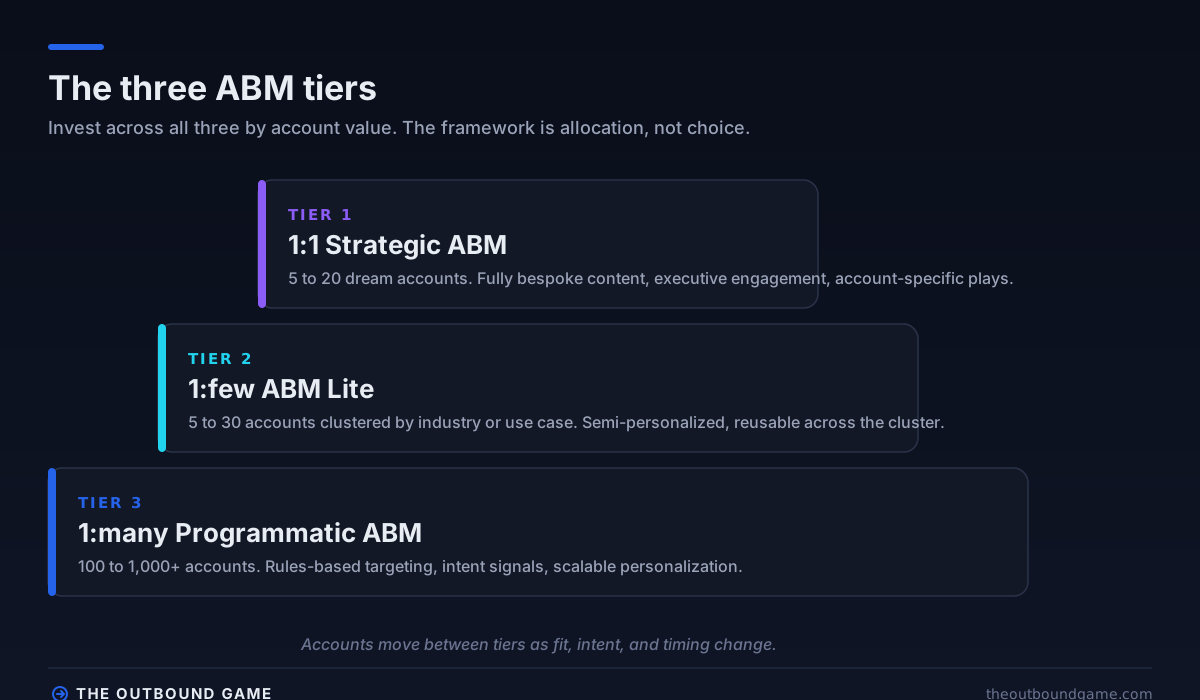
- Tier the list, do not flatten it. Run one-to-one for a handful of strategic accounts, one-to-few for clusters, and one-to-many programmatically, and invest across all three by value.
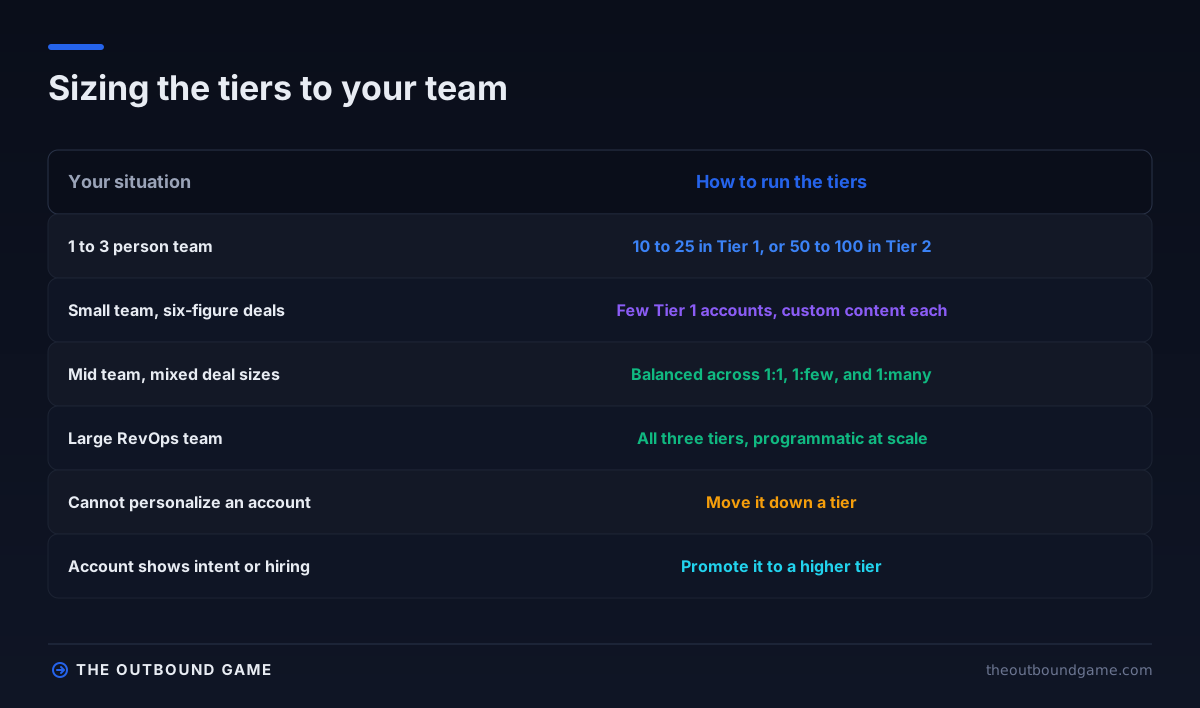
- Size tiers to your team, not your ambition. It is better to do Tier 2 well than Tier 1 poorly. If you cannot create custom content per account, move it down a tier.
- Run one list with sales. A shared target account list, shared definitions, and account-level metrics beat two teams chasing separate leads.
- Coordinate the channels. Email, LinkedIn, calling, and ads aimed together at the buying committee progress pipeline far faster than any single channel alone.
The rest of this guide is the playbook behind those four rules.
What an ABM strategy actually is
Account-based marketing inverts the funnel. Instead of generating broad leads and filtering down, you start from a defined list of best-fit accounts and concentrate sales and marketing effort on the specific companies and people most likely to become high-value customers. The unit of work is the account, not the lead, and success is measured by how deeply you penetrate the target list, not how many forms get filled.
That shift rests on five principles every durable account-based marketing strategy shares: tight focus on a short list, real sales and marketing alignment, genuine personalization, clean data, and constant iteration. Skip any one and the program degrades into expensive noise. The foundation under all of it is a precise ideal customer profile built from firmographics, technographics, intent, and engagement signals, the same profile that should govern your broader b2b prospecting so the focused and the broad motions point at the same kind of company.
The three ABM tiers: one-to-one, one-to-few, one-to-many
The cleanest way to talk about account tiering without arguing definitions is the Momentum ITSMA taxonomy that vendors and analysts share.
One-to-one ABM, or strategic ABM, is fully bespoke. Every touch is custom: tailored content, executive engagement, account-specific events and ads. It typically targets five to twenty dream accounts, and it only makes sense when the deal size justifies that level of effort. One-to-few, or ABM Lite, groups similar accounts into clusters by industry, challenge, tech stack, or stage, usually somewhere between five and thirty accounts, and uses semi-personalized content that speaks to the shared problem so you can reuse it across the cluster. One-to-many, or programmatic ABM, targets a larger defined list, often one hundred to over a thousand accounts, with rules-based targeting, intent signals, and scalable personalization.
The critical discipline is that one-to-many is not “run ads to a big list.” If your only output is impressions and clicks, you are doing demand generation with a target account list taped on top. Real programmatic ABM is tight segmentation, fast routing, and buying-committee coverage, run as a revenue workflow with service levels and stage definitions, not a banner campaign.
Building and tiering the target account list
Everything starts with the list. Score and rank accounts on fit and potential using your ICP, then sort them into tiers by value and by the resources each tier demands. The platform layer that powers selection and intent scoring is covered in the demandbase vs 6sense comparison, and the contact and firmographic data that feeds it lives in the b2b data providers and data enrichment tools layers.
The number that trips teams up is Tier 1 count. A one-to-three person team can realistically run custom content and personalized outreach for maybe ten to twenty-five strategic accounts, or manage fifty to one hundred clustered accounts at the one-to-few level. Quality of execution matters far more than the size of the list. If you cannot produce genuinely custom work for an account, it does not belong in Tier 1, and the right move is to demote it rather than dilute the whole program.
Accounts are not frozen in their tier. The best programs let accounts move: a one-to-many account that starts showing hiring or intent signals gets promoted into a one-to-few or one-to-one play, and a strategic account that goes quiet drops back. The list is a living thing scored against fit, intent, and timing.
Sales and marketing alignment: one list, shared definitions
ABM fails the moment sales and marketing operate on separate lists, separate data, and separate definitions of success. Alignment is not a kickoff meeting, it is an operating model, and roughly seventy percent of practitioners say it is what lets both teams work efficiently.
Four things make it real. A shared target account list that neither team changes unilaterally. Shared definitions of what counts as a target account, an engaged account, and a sales-ready account, so nobody argues about handoffs. Shared metrics built on account engagement, pipeline generated, and revenue influenced rather than marketing-qualified leads. And a regular sync, weekly or biweekly, where both teams review the same accounts, trade intelligence, and coordinate the timing of outreach. Get those four right and the program runs on rails; miss them and even a great tool produces dashboards instead of deals.
Orchestrating the plays across channels
Personalization is the input; orchestration is what turns it into pipeline. The point of an account-based program is to reach the whole buying committee, often six or more stakeholders inside one organization, with a coordinated set of touches rather than a single channel hammering one contact.
In practice that means aligning email, LinkedIn, calling, and advertising so they land together against the account, sequenced by buying stage. Coordinated multi-channel programs progress pipeline dramatically faster than single-channel efforts, on the order of twice as fast or more in published studies, because the committee sees a consistent message from several directions at once. The channels themselves are covered in depth in the cold email software, linkedin outreach, and sales engagement guides, the sequencing in the sales cadence guide, and the standing channel for ABM social touches is naturally LinkedIn for its account and role targeting.
Measuring an ABM strategy without lying to yourself
The fastest way to kill a working program is to measure it like demand gen. If you judge an account-based motion on lead volume, you are using the wrong yardstick and a healthy program will look like a failure.
Measure four things instead. Account penetration: how many target accounts you are actively engaging and how many roles inside each. Pipeline from the target list, kept separate from pipeline at large. Win rate inside the list. And buying-group coverage, where for a strategic account you aim to engage five or more stakeholders, not celebrate that one champion clicked an ad. Pair that with a service level on engaged accounts, for example a sales touch within twenty-four hours of an account crossing the engagement threshold, or you are simply paying for awareness. Surveys put the share of teams now using AI somewhere around three-quarters, mostly to compress list building and research, which frees rep time but does not change which metrics matter. You can sanity-check category benchmarks on G2, where roughly eighty-five percent of B2B companies report ABM as important to retaining and expanding accounts, and against the analyst view from Gartner.
Five mistakes that wreck an ABM strategy
What we see most often is the same handful of errors, none of which a bigger budget fixes.
-
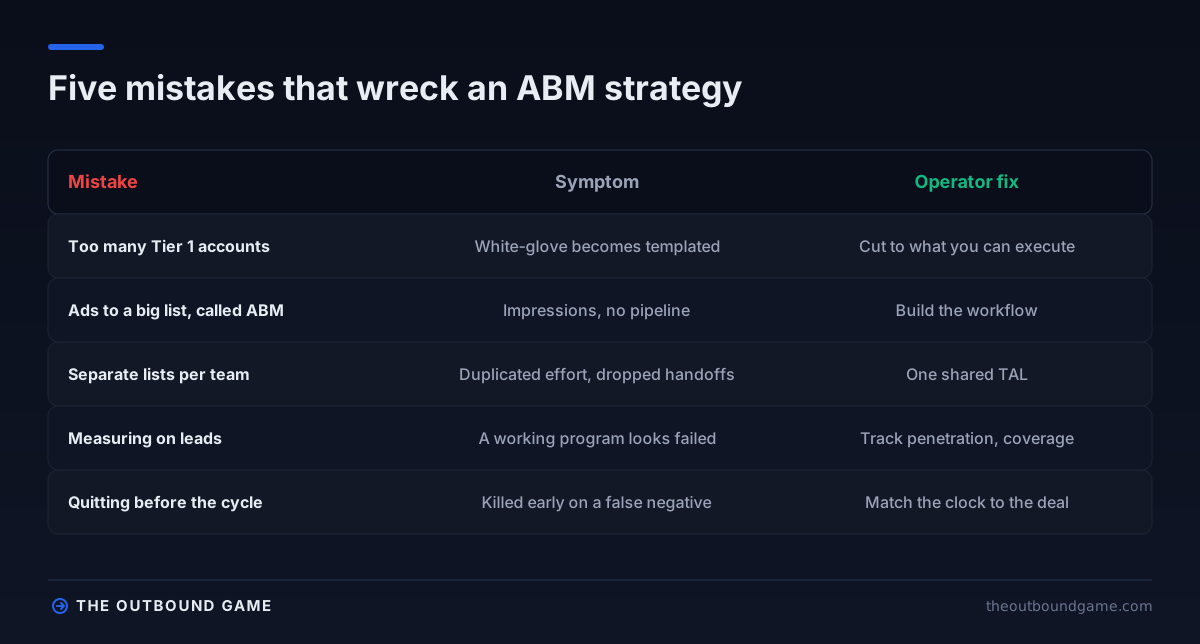
Too many Tier 1 accounts. A list the team cannot personalize turns white-glove into templated, which insults the accounts you most wanted to win. Cut Tier 1 to what you can genuinely execute.
-
Ads to a big list, called ABM. Impressions and clicks with no routing, coverage, or sales follow-up is demand gen wearing an ABM label. Build the workflow, not just the audience.
-
Separate lists for sales and marketing. Two definitions of a good account double the waste and drop the handoffs. One shared target account list, always.
-
Measuring on leads. Lead counts make a working account program look broken. Track penetration, target-account pipeline, win rate, and committee coverage.
-
Quitting before the cycle completes. Strategic accounts with year-long buying cycles cannot be judged at ninety days. Match the clock to the deal or you will kill the program early.
An eight-step framework to build your ABM strategy
Run this order to take a program from blank page to live.
- Set revenue-aligned goals. Define the pipeline and revenue outcomes the program owns, not activity targets, so every later choice ties to a number.
- Build one ICP. Score fit from firmographics, technographics, intent, and engagement, and use the same profile for both motions.
- Build and tier the list. Rank accounts by value and effort, then sort into one-to-one, one-to-few, and one-to-many, sizing each tier to your headcount.
- Map the buying committee. For each priority account, identify the roles and the pain that moves each one, since you are selling to a group.
- Align sales and marketing. Lock the shared list, the shared definitions, and the weekly sync before any campaign launches.
- Build tier-appropriate content and plays. Custom for one-to-one, cluster-themed for one-to-few, segment-driven for one-to-many.
- Orchestrate the channels. Sequence email, LinkedIn, calling, and ads by buying stage so the committee sees a coordinated message.
- Measure and iterate on account metrics. Track penetration, pipeline, win rate, and coverage, and rebalance tiers as accounts move on signals.
How this fits the broader stack
An ABM strategy sits on top of the same outbound and revenue infrastructure the rest of the motion uses. Each layer has a deeper guide.
- The strategy foundation. What account-based marketing is, in the account-based marketing pillar.
- The tools. The platforms that run it, in best abm tools and the demandbase vs 6sense comparison.
- The data layer. Fit and contact data for account selection, in b2b data providers and data enrichment tools.
- Intent and research. The signals that tier and promote accounts, in sales intelligence tools.
- The system of record. Where target-account pipeline lives, in crm software.
- The channels. How the committee gets engaged, in cold email software, linkedin outreach, and sales engagement.
- The cadence. How touches are sequenced for each tier, in sales cadence.
- Deliverability. Whether the outreach is ever seen, in email deliverability.
The map is consistent: one ICP scores the list, tiering allocates effort by value, alignment keeps one team on one list, orchestration reaches the committee across channels, and account metrics tell you the truth. The tool is only ever as good as the list and the discipline beneath it.
Frequently asked questions
What is an ABM strategy?
What are the three types of ABM?
How many accounts should be in each ABM tier?
How do you build a target account list?
How do you measure ABM success?
Why do sales and marketing alignment matter so much in ABM?
How long before an ABM strategy shows results?
The bottom line
An ABM strategy lives or dies on execution, not ambition. The framework is simple to state and hard to run: define one ICP, build and tier a target account list, size each tier to the team you actually have, align sales and marketing on that single list, orchestrate coordinated plays against the buying committee, and measure on account penetration rather than lead volume.
The discipline is what separates the programs that print pipeline from the ones that quietly die. Keep Tier 1 small enough to do well, let accounts move between tiers on real signals, refuse to call a list of ad impressions account-based marketing, and match your patience to the length of the buying cycle. Do that and the strategy stops being a deck and starts being a motion, the focused half of a go-to-market engine that concentrates your best effort exactly where the revenue is.
Get the operator playbook in your inbox. The Outbound Game publishes one operator-grade breakdown a week on B2B outbound sales, tactics, tooling, and ops. No fluff, no vendor talking points. Subscribe and get the next one when it ships.
More on Outbound Strategy
Cold Email vs LinkedIn Outreach: Which Wins in 2026?
Cold email vs LinkedIn outreach in 2026: the reply rate and cost data, the volume caps, when each channel wins, and the combined sequence that beats both.
How to Start Outbound Sales in 2026 (60 Day Roadmap)
How to start outbound sales from zero in 2026: the 60 day roadmap from ICP to first meetings, the starter stack, and the metrics that prove the channel.
LinkedIn Connection Request Message: What Works in 2026
LinkedIn connection request message guide for 2026: the note paradox, the 120 to 180 character sweet spot, and the acceptance rate math that gates volume.