Demandbase vs 6sense in 2026: A Full Operator Verdict
Demandbase vs 6sense compared for 2026 on pricing, intent data, advertising, AI agents, and CRM fit, plus the one factor that should decide it.
The honest answer to Demandbase vs 6sense is that these two platforms are far more alike than the demos make them look, and the decision almost never turns on the feature checklist a sales rep walks you through. Both are the category-defining enterprise ABM platforms. Both are Leaders in the 2026 Gartner Magic Quadrant for the sixth consecutive year. Both pull from the same Bombora intent data co-op underneath their own signals, and both will quote you somewhere between 50,000 and 300,000 dollars a year once advertising and premium modules are layered on.
So the real question is not which has the better dashboard. It is which one fits the program, the CRM, and the team you actually have. The differentiators that matter are narrow: Demandbase is built advertising-first and orchestration-first, 6sense is built predictive-analytics-first, they integrate most deeply with different CRMs, and they suit different revenue stages. Get those right and either platform produces pipeline. Get them wrong and you have bought a six-figure tool your team opens twice a month.
This guide compares Demandbase vs 6sense the way an operator running B2B prospecting actually decides, on price, data, advertising, AI agents, CRM fit, and stage, then names the single factor that should settle it. It is a head-to-head inside the account-based marketing cluster, it sits next to the category-level best abm tools guide, and the account and contact data that feeds either platform comes from the b2b data providers layer.
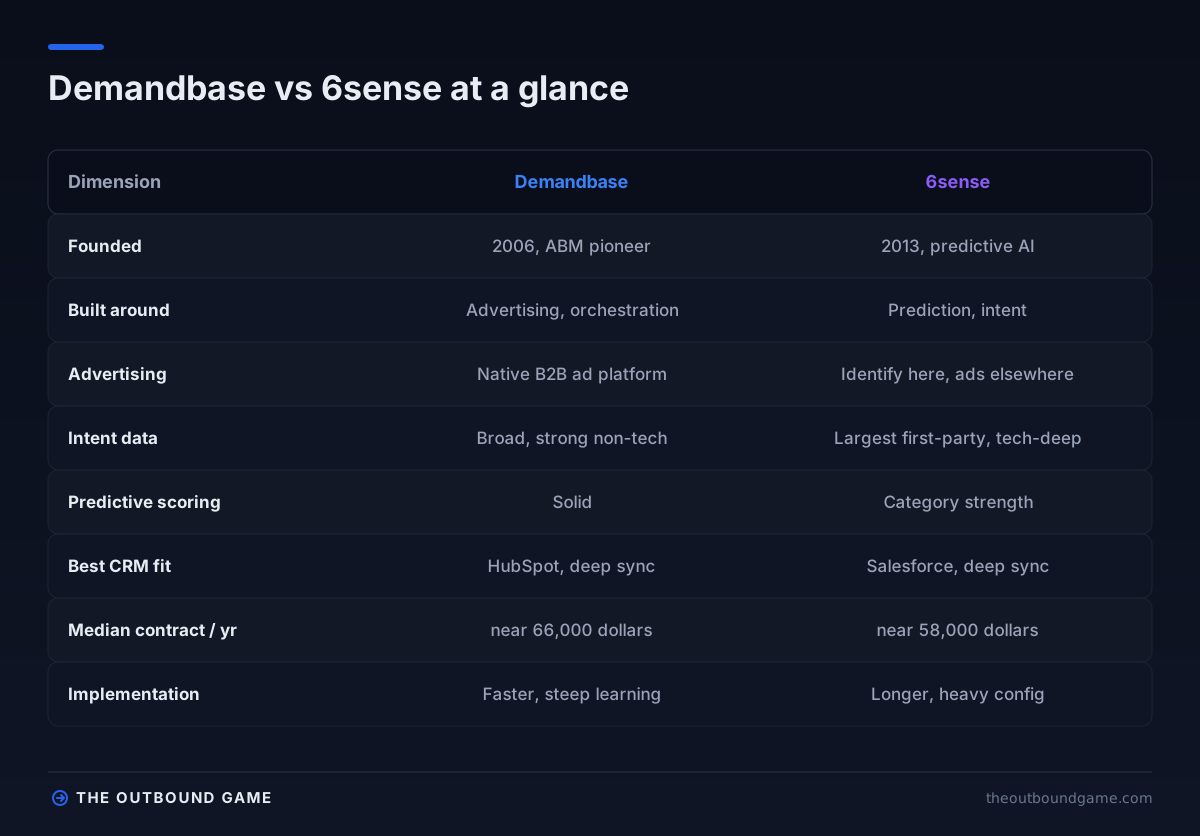
Quick verdict: Demandbase vs 6sense
If you only read one section, read this one.
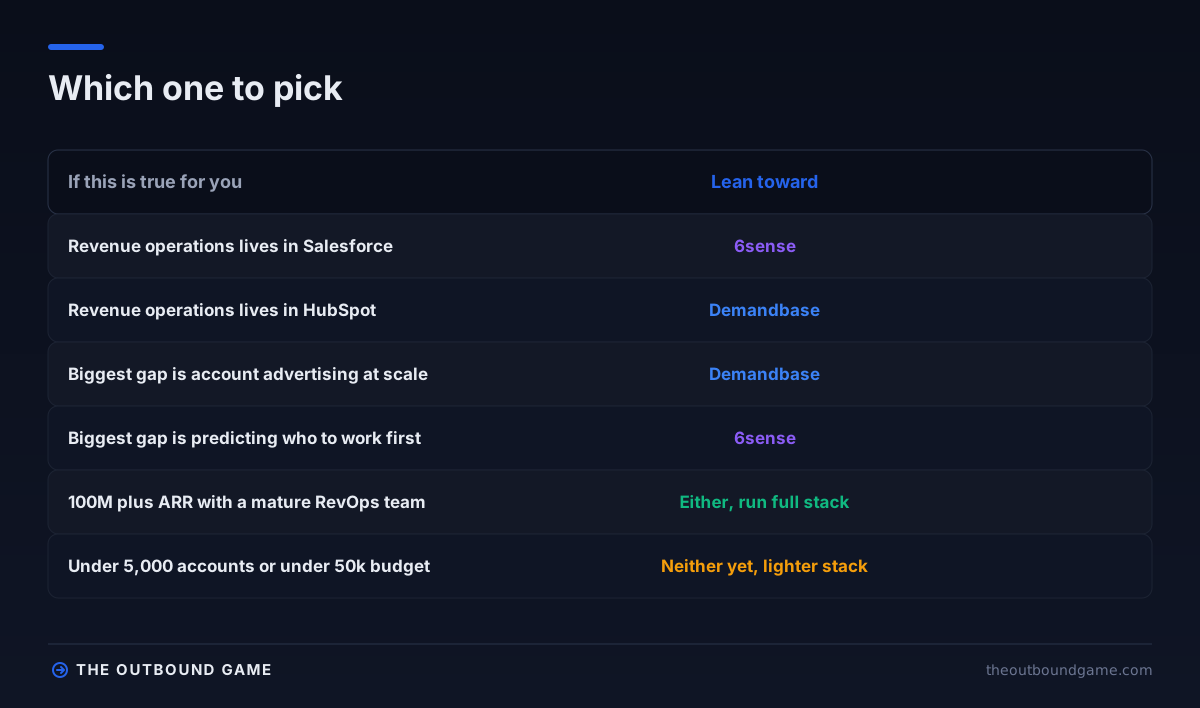
- Choose Demandbase if your primary gap is account-based advertising and orchestration at scale, you run a marketing-led motion, and your revenue operations lives in HubSpot.
- Choose 6sense if your primary gap is knowing which accounts to work first, you have strong outbound talent to act on signals, and your revenue operations lives in Salesforce.
- Choose neither, yet if your target list is under roughly 5,000 accounts or your budget is under roughly 50,000 dollars a year. A lighter stack will return more pipeline per dollar.
- Either works once you have a real program, a tiered target list, sales and marketing alignment, and a dedicated person to run the platform.
The rest of this guide shows the evidence behind that verdict and the framework to apply it to your own situation.
Demandbase vs 6sense: the core difference
Both platforms reached the top of the same Gartner quadrant from opposite starting points, and that origin still shapes how each one works.
Demandbase, founded in 2006, pioneered the ABM category and built outward from advertising and orchestration. Its bet is that the platform should run the whole motion in one place, account identification, intent, advertising, and multi-channel campaign execution, from a single dashboard. It operates the only B2B-native demand-side platform for buying ads, and its sales-intelligence depth grew after the InsideView and DemandMatrix acquisitions.
6sense, founded in 2013, built outward from prediction. Its bet is that machine learning on intent and engagement signals can tell you which accounts are entering a buying window before they raise a hand. Its strengths are predictive analytics, buying-stage modeling, and early sales alerts, backed by the deepest behavioral signal graph in the category.
Both are excellent ABM platforms, and searched either way, Demandbase vs 6sense or 6sense vs demandbase, the comparison lands on the same axis: advertising and orchestration against prediction and intent. One useful framing is that 6sense wins the data-depth conversation while Demandbase wins the data-to-action conversation, so the right pick depends on whether your team is bottlenecked on finding signal or on activating it. If the gap is “we cannot run targeted account advertising at scale,” that points to Demandbase. If the gap is “we do not know which accounts to work first,” that points to 6sense.
Intent data and predictive analytics: where 6sense leads
Because both platforms ingest the same Bombora co-op data, the raw intent signal is more similar than either vendor admits. The differences show up in coverage and modeling.
6sense layers heavier predictive analytics on top of the signal, which makes it the stronger pick for teams that want a buying-stage prediction rather than a raw topic surge. Its coverage is most granular for software and technology buyers who leave a heavy digital footprint. Demandbase tends to provide broader coverage across non-technology verticals like manufacturing, financial services, and healthcare, where buyers leave fewer signals on review sites, so for some traditional industries it is the only reliable intent feed available.
Both share the same blind spot. Intent quality degrades fast for small companies. If your target market is full of businesses under 100 employees, neither one gives comprehensive coverage, and you are better served by the sales intelligence tools and data enrichment tools layers feeding direct outreach. Intent data is a prioritization aid for accounts that generate enough signal to model, not a ready-to-call list, and treating it as a list is one of the most common ways these platforms disappoint.
The 2026 AI agent layer: RevvyAI, Revenue AI, and Demandbase AI
The freshest axis in 2026, and the one most comparison articles skip, is the AI agent layer both vendors shipped over the last year.
6sense now markets itself as an agent-powered revenue platform. Its Spring 2026 release introduced RevvyAI, an assistant that answers questions and generates insights across campaigns and accounts in natural language, and its Revenue AI line adds predictive scoring plus an AI email agent and conversational AI aimed at autonomous prospect engagement. Demandbase AI in 2026 leans the other way, toward insights and recommendations rather than fully autonomous agents.
The honest operator read is to discount the agent marketing for now. As of early 2026, both agent lines are closer to intelligent assistants than to truly autonomous agents, so do not let an agent demo decide a six-figure, multi-year contract. Buy the platform on its proven core, advertising and orchestration for Demandbase, prediction and intent for 6sense, and treat the agent layer as upside, not as the reason to sign.
CRM fit usually decides it
The factor that quietly settles most evaluations is which system of record your revenue team works from, because the value of any ABM platform is capped by how cleanly its scores and signals flow into the CRM where reps live.
The consensus across buyers is that 6sense pairs most naturally with Salesforce-centric operations, with deep native-object and bidirectional sync, while Demandbase has the deeper HubSpot bidirectional integration of the two. Setups vary and both connect to both, but the integration depth is rarely equal. A platform whose signals do not surface inside the rep’s daily view gets ignored regardless of how good the model is. This is the same consolidation-versus-best-of-breed tradeoff covered in the crm software pillar and the salesforce vs hubspot comparison, applied to the account-based layer.
Demandbase vs 6sense on price and total cost
Neither vendor publishes pricing, and both treat a quote like classified intelligence, which is exactly why buyers struggle. The real-world numbers tell a clearer story than the demo.
Transaction data puts the median 6sense contract around 58,000 to 60,000 dollars a year and the median Demandbase contract around 66,000 to 68,000 dollars a year. Published tier benchmarks run from roughly 40,000 dollars at the Demandbase entry level to 250,000 dollars and beyond for enterprise, and higher at the 6sense top end, where the heaviest deals pass a million. 6sense has also introduced a lower entry point, an AI data agent tier starting near 10,000 dollars, though meaningful ABM capability still sits well above that. You can review current positioning and user sentiment on 6sense and Demandbase on G2, where the two sit within a tenth of a point of each other.
The sticker price is never the real cost. Implementation services commonly add 10,000 to 30,000 dollars, and far more at the high end, with Demandbase implementations typically landing faster and 6sense implementations taking longer and demanding more configuration. Both effectively require half to a full dedicated revenue operations person to run, a fully loaded cost that often rivals a chunk of the license.
Two practical notes. Demandbase frequently bundles advertising spend into the platform fee, so its all-in number can look lower at a comparable tier, while 6sense pricing for the same tier can swing two to three times depending on contract length and module bundle. And the number moves: get real benchmarks before you negotiate, name competitive evaluation out loud, and push back on the standard multi-year term, because buyers who do routinely move the price.
The accessible alternative most teams actually need
The most important verdict in any Demandbase vs 6sense comparison is that for a large share of teams evaluating them, the right answer is neither, at least not yet.
These platforms are built for scale, and they need scale to pay off. If your total addressable market is under roughly 5,000 accounts, or your ABM budget is under roughly 50,000 dollars a year, the economics do not work. You will get more pipeline per dollar from a lighter stack: verified contact data for direct outreach, plus manual target-account uploads to your ad platforms.
The category hype pushes every team toward an enterprise suite. The ABM platform market is growing fast, from around 1.2 billion dollars in 2024 toward a projected 4.5 billion by 2033, and around 71 percent of organizations now run some form of account-based program. But maturity and fit, not category momentum, should drive the decision. The data layer that powers a lighter approach lives in the b2b data providers and enrichment tools.
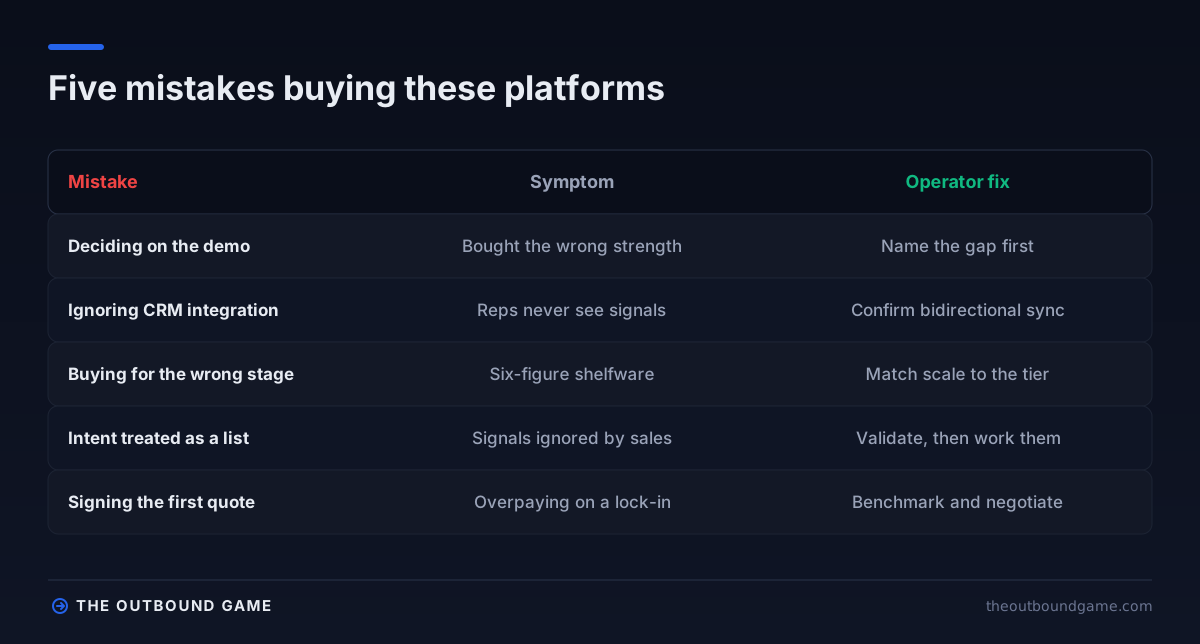
Five mistakes teams make choosing between them
What we see most often is the same handful of errors that turn a six-figure ABM software contract into shelfware.
-
Deciding on the demo, not the gap. Both demos look like magic. Name the specific gap, advertising or prediction, before you sit through either pitch, because the gap points to the platform.
-
Ignoring CRM integration depth. A platform whose signals do not surface cleanly in your CRM gets ignored by reps. Confirm native, bidirectional integration with your system of record before anything else.
-
Buying for a stage you are not at. These suites need a real program and dedicated headcount. A team under a few thousand target accounts with no ops support wastes most of the spend.
-
Treating intent data as a buying list. Intent is a prioritization aid, not a list of ready buyers. Signals nobody validates and works become expensive notifications.
-
Signing the first quote and the standard term. Opaque pricing favors the vendor. Bring benchmarks, name competitive evaluation, and negotiate the multi-year term and the implementation fee separately.
An eight-step framework for choosing between Demandbase and 6sense
Run this order before you sign anything. It keeps the decision on fit rather than on the demo.
- Build the program first. Define a short, tiered target account list and sales and marketing alignment before you evaluate either platform.
- Name your single biggest gap. Decide whether the real need is account advertising at scale or predictive prioritization, since that alone separates the two.
- Map your CRM. Confirm where revenue operations actually lives, then weight integration depth heavily, Salesforce toward 6sense, HubSpot toward Demandbase.
- Check your stage. Place yourself by addressable market and budget, and be honest about whether you clear the scale these platforms need.
- Validate intent on your real ICP. Test signal quality on your own target accounts and verticals, since coverage differs by industry and degrades for small companies.
- Confirm sales will act. Make sure reps trust and will work the signals, or the platform produces dashboards rather than pipeline.
- Get real pricing benchmarks. Pull transaction data, model the all-in cost including implementation and the ops headcount, not just the license.
- Negotiate hard, then start narrow. Name competitive evaluation, separate the implementation fee, prove value on a focused program, and expand only once the motion works.
How this choice fits the broader stack
The platform is the orchestration layer on top of an account-based program. Each connected layer has a deeper guide.
- The strategy. The program the platform serves, in the account-based marketing pillar.
- The category map. Where these two sit among all options, in best abm tools.
- The data layer. Fit and contact data for account selection, in b2b data providers and data enrichment tools.
- Intent and research. The signals that prioritize accounts, in sales intelligence tools.
- The system of record. Where the program lives, in crm software and salesforce vs hubspot.
- The channels. How accounts get engaged once prioritized, in cold email software and linkedin outreach.
- The cadence. How touches are sequenced, in sales cadence.
- Deliverability. Whether the outreach is ever seen, in email deliverability, and the motion the platform amplifies, in outbound sales.
Both platforms are Gartner Leaders for a reason, and you can see the current standings in the Magic Quadrant for ABM platforms. The map is consistent: the data feeds selection, intent prioritizes the tiers, the platform orchestrates and advertises, and the program and alignment hold it together, with the tool only as valuable as the list and discipline beneath it.
Frequently asked questions
What is the difference between Demandbase and 6sense?
Is Demandbase or 6sense better for advertising?
Which has better intent data, Demandbase or 6sense?
How much do Demandbase and 6sense cost in 2026?
Do the new 6sense and Demandbase AI agents change the decision?
Does CRM choice affect the Demandbase vs 6sense decision?
Should a small or mid-market team buy either platform?
The bottom line
Demandbase vs 6sense is rarely won on the feature checklist, because both are 2026 Gartner Leaders, both run on the same underlying intent data, and both will cost you somewhere between 50,000 and 300,000 dollars a year all in. The new AI agent lines on both sides do not change that yet, since they are still assistant-grade in practice.
The real decision turns on three honest questions: which CRM your revenue team actually lives in, whether your single biggest gap is running account advertising at scale or predicting which accounts to work first, and whether you have the program, the scale, and the dedicated headcount to run an enterprise platform at all. Map those and the winner is usually obvious, Demandbase for the advertising engine and a HubSpot-centric stack, 6sense for the prediction and a Salesforce-centric stack.
If you take one rule from this comparison, make it this: buy the program before the platform, and choose on fit before features. An ABM platform amplifies a short, well-tiered target list and real sales and marketing alignment; it never substitutes for them, and if your target list is under a few thousand accounts with no one to run it, the right answer is neither tool yet. Define the list, map your CRM, name your gap, then pick the platform that matches the team you actually have.
Get the operator playbook in your inbox. The Outbound Game publishes one operator-grade breakdown a week on B2B outbound sales, tactics, tooling, and ops. No fluff, no vendor talking points. Subscribe and get the next one when it ships.
More on Outbound Strategy
Cold Email vs LinkedIn Outreach: Which Wins in 2026?
Cold email vs LinkedIn outreach in 2026: the reply rate and cost data, the volume caps, when each channel wins, and the combined sequence that beats both.
How to Start Outbound Sales in 2026 (60 Day Roadmap)
How to start outbound sales from zero in 2026: the 60 day roadmap from ICP to first meetings, the starter stack, and the metrics that prove the channel.
LinkedIn Connection Request Message: What Works in 2026
LinkedIn connection request message guide for 2026: the note paradox, the 120 to 180 character sweet spot, and the acceptance rate math that gates volume.