Best ABM Tools in 2026: A Full Operator Field Guide
The best ABM tools in 2026 by category and budget: all-in-one platforms, intent data, ad targeting, and the CRM-native options, plus what to buy first.
The best ABM tools in 2026 are not one platform but four categories of software, and the most expensive mistake in account-based marketing is buying a single all-in-one suite when a combination would have fit your budget and stage far better. The market spans from free CRM-native features to enterprise platforms running well past 100,000 dollars a year, and they do genuinely different jobs: some identify in-market accounts, some supply intent data, some run account-targeted ads, and some orchestrate the whole motion inside your CRM. Picking well means matching the category, and the budget tier, to the program you are actually running, not to the most impressive demo you sat through, the same discipline that governs B2B prospecting generally.
That framing matters because the demo is always dazzling and the reality is often a tool your team logs into twice a month. The honest pattern across buyers is that account-based platforms can take months to integrate, their intent data can be noisy, and sales will ignore signals it does not trust, so a 40,000-dollar platform with no program behind it becomes shelfware fast. This guide breaks the field into its four categories, maps them to budget tiers from cost-optimized to enterprise, and keeps the focus on the discipline that decides whether any of them pays off: a short, well-tiered target list and real sales and marketing alignment underneath the software.
This is a tooling guide inside the account-based marketing cluster, which covers the strategy at the pillar level, and it connects to the data and targeting layers in b2b data providers and sales intelligence tools. Whichever tools you choose run on top of the crm software both teams work from.
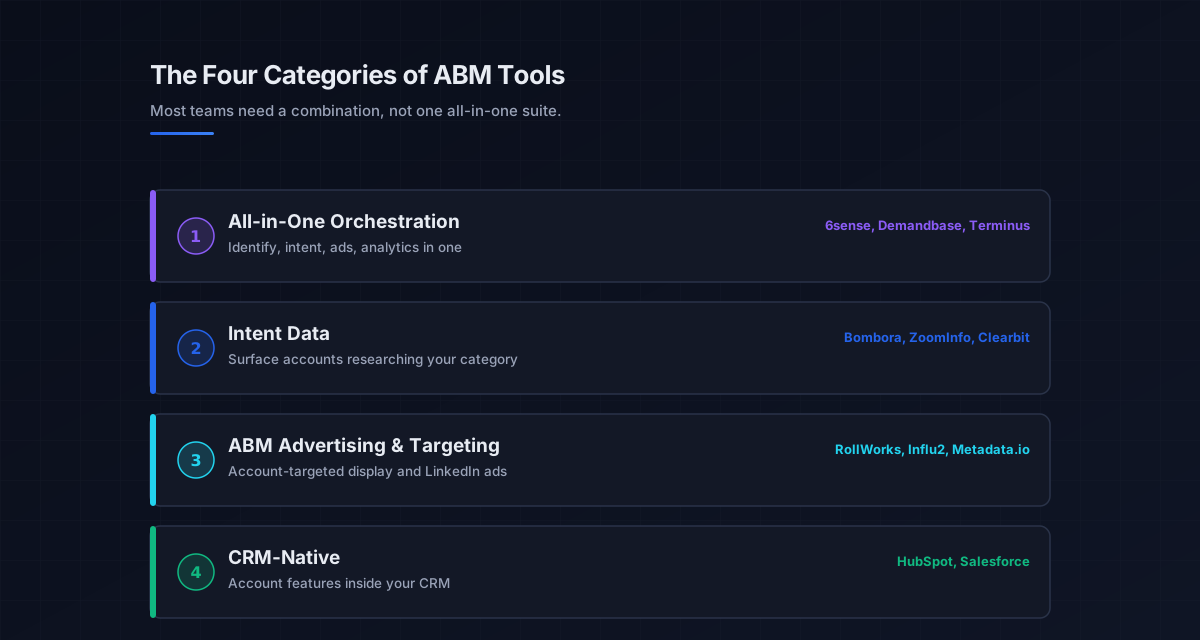
The best ABM tools fall into four categories
Before comparing vendors, name the categories, because the best ABM tools for you depend entirely on which job you need done, and most teams need capabilities from more than one.
All-in-one orchestration ABM platforms are the heavyweight category: 6sense, Demandbase, and Terminus combine account identification, intent data, advertising, and analytics in a single system, handling scoring, campaign execution, and measurement under one login. They are powerful and priced for enterprise. Intent data platforms are the second category: Bombora, ZoomInfo, and Clearbit track which accounts are researching your category through web activity and content consumption, surfacing in-market buyers early. ABM advertising and targeting tools are the third: RollWorks, Influ2, and Metadata.io run programmatic display and LinkedIn ads aimed at specific accounts, with RollWorks the most accessible of the major platforms. And CRM-native solutions are the fourth: HubSpot and Salesforce bundle account-based features, target account dashboards, company scoring, buying-role tracking, directly into the CRM, so teams already in those ecosystems avoid a separate platform. The strongest stacks usually combine categories, intent feeding identification feeding ads, rather than relying on one tool to do everything.
Matching tools to budget and stage
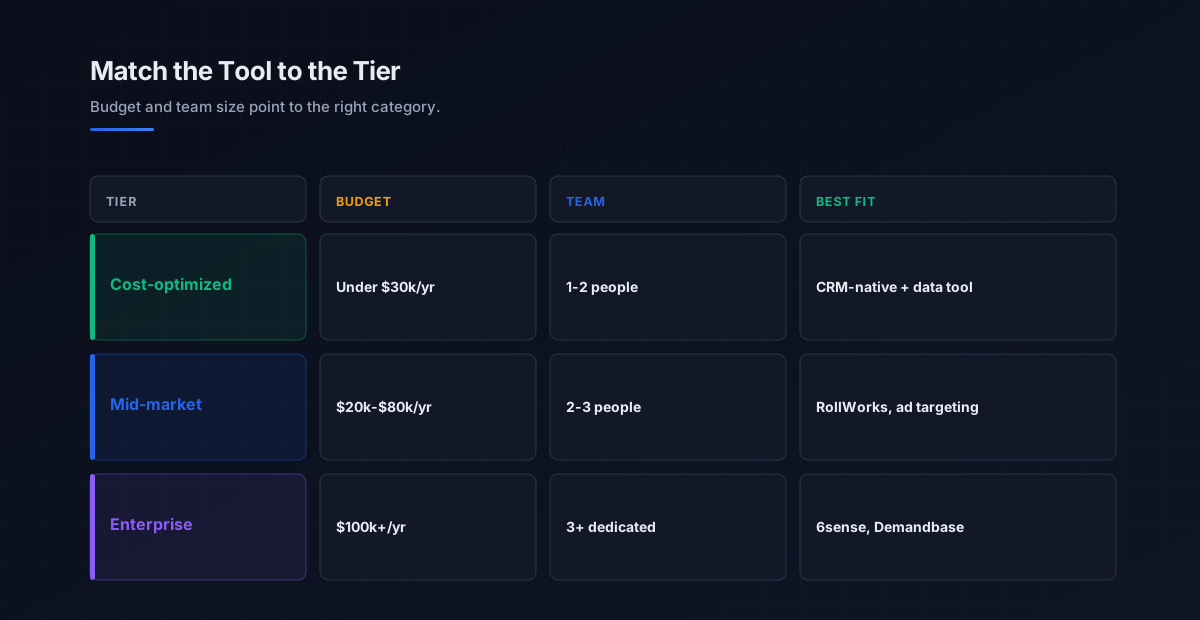
Because the categories span a vast price range, the cleanest way to choose the best ABM tools is by budget and team size, which maps neatly onto three tiers.
The cost-optimized tier, under roughly 30,000 dollars a year with a one or two person team, is best served by combining an affordable data and prospecting tool with CRM-native ABM features rather than buying a dedicated platform, an approach that delivers basic account targeting without the enterprise overhead. The mid-market tier, roughly 20,000 to 80,000 dollars with a small team focused on sales and marketing alignment and orchestration, is where account-based advertising platforms like RollWorks fit, offering monthly contracts and sub-1,000-dollar entry points that make them the realistic option for companies testing ABM before a large commitment. The enterprise tier, 100,000 dollars and up with a dedicated team running full-stack ABM with ads and revenue intelligence, is where 6sense and Demandbase earn their premium, with Demandbase and 6sense commanding 60,000 to 300,000-plus dollars a year. HubSpot’s account-based tools, bundled into Marketing Hub Enterprise, add no incremental cost for existing HubSpot customers, which often settles the question for teams already in that ecosystem. The contact and fit data feeding any of these tiers comes from the b2b data providers and data enrichment tools layers.
The all-in-one platforms: 6sense and Demandbase
For enterprise teams, the all-in-one platforms are the reference point, and the two most established are 6sense and Demandbase. 6sense identifies in-market accounts, scores them, and targets them across channels, blending intent data from multiple sources with predictive signals to surface accounts matching your ICP, and it integrates with Salesforce, HubSpot, Outreach, and Salesloft. Demandbase is the other legacy leader, strong on account identification, audience segmentation, account-level advertising, and the dashboards and reporting that help teams track individual accounts and their buying committees. Both are cited as core to aligning sales and marketing in large organizations.
The honest caveat is cost and complexity. Both carry high costs, from 50,000 to 300,000-plus dollars a year, and complex implementations, several weeks for 6sense and a steep learning curve for Demandbase, which makes them a tough fit for most mid-market teams. They are genuinely powerful when implemented correctly and fed by a real program, but they are exactly the tools that become expensive shelfware when bought without the tier-1 list discipline and alignment the account-based marketing pillar describes. For a team that cannot dedicate people to run them, a lighter combination usually delivers more pipeline per dollar.
The accessible and CRM-native options
Not every team needs, or should buy, an enterprise platform, and the accessible options are where most programs should start. RollWorks is the most approachable of the major platforms, focused on account-based advertising and identification without the complexity and cost of the enterprise suites, and it is the only major platform offering monthly contracts and sub-1,000-dollar entry pricing, which makes it the realistic choice for companies under 5 million in revenue or anyone wanting to test ABM before a large commitment. Its core strength is programmatic display and LinkedIn advertising to a target account list, with reporting that ties ad impressions to account engagement.
The CRM-native route is often the smartest starting point of all. HubSpot bundles account-based features into Marketing Hub Enterprise at no incremental cost for existing customers, with target accounts dashboards, company scoring, and buying-role tracking inside the CRM the team already uses, and Salesforce offers comparable capabilities. For a cost-optimized program, pairing an affordable data and prospecting tool with these native features covers basic ABM without a separate platform at all. This is the same consolidation-versus-best-of-breed tradeoff covered in the crm software pillar and the salesforce vs hubspot comparison, applied to account-based features, and the affordable data layer that feeds it overlaps with the b2b data providers tools.
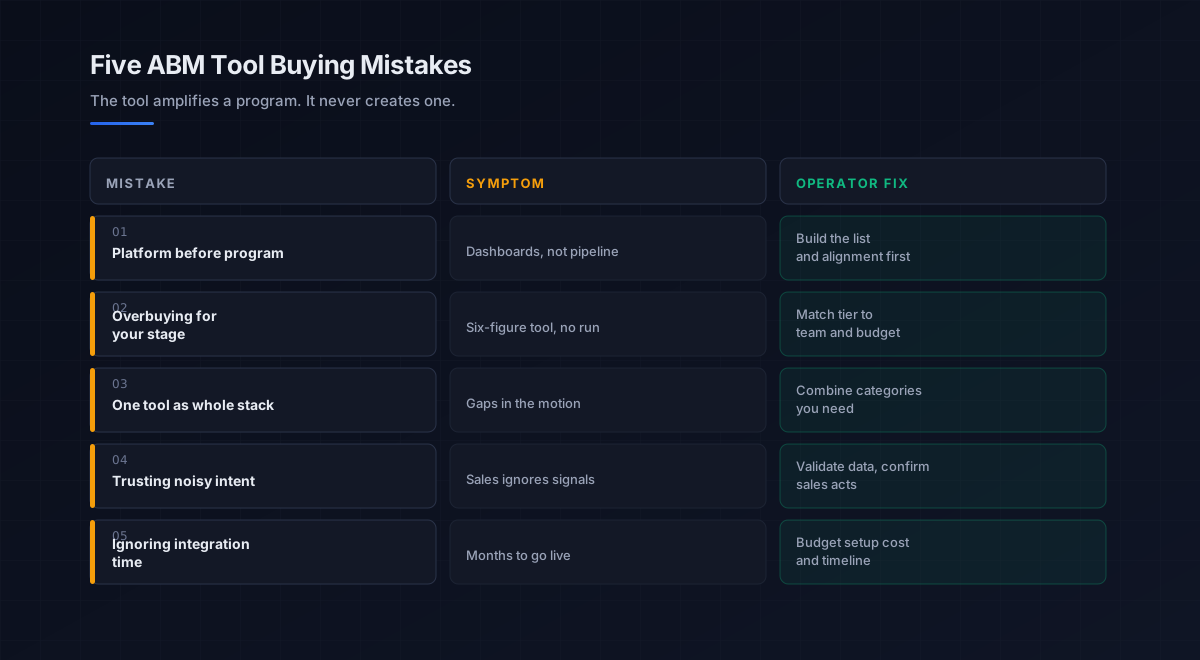
Five mistakes teams make buying ABM tools
What we see most often is the same handful of errors that turn ABM software into shelfware.
-
Buying the platform before the program. A tool with no tier-1 list or alignment behind it produces dashboards, not pipeline. Build the program first.
-
Overbuying for your stage. A six-figure enterprise suite for a team that cannot run it wastes most of the spend. Match the tier to your team and budget.
-
Treating one tool as the whole stack. The categories do different jobs. Most teams need a combination, intent plus targeting plus CRM, not one suite.
-
Trusting noisy intent data blindly. Signals sales does not believe get ignored. Validate intent quality and confirm sales will act on it before buying.
-
Ignoring integration time. Enterprise platforms can take months to integrate. Budget the implementation cost and timeline, not just the license.
An eight-step framework for choosing ABM tools
This is the order we work through with the teams we work with when they select account-based software. Run it before signing anything.
- Build the program first. Define a short, tiered target account list and sales and marketing alignment before evaluating any tool.
- Name the gap. Decide which job you actually need, identification, intent, advertising, or orchestration, since that points to the category.
- Set the budget tier. Place yourself in cost-optimized, mid-market, or enterprise by team size and spend.
- Shortlist by category and tier. Match the gap and budget to the right tools rather than the most impressive demo.
- Check the integrations. Confirm the tool connects cleanly to your CRM and channels, and budget the integration time.
- Validate the data. Test intent and account data quality on your real ICP before committing, since noisy data gets ignored.
- Confirm sales will act. Make sure sales trusts and will work the signals, or the tool produces notifications nobody uses.
- Start small, then expand. Prove value on a focused program before scaling spend, and consolidate tools only once the motion works.
How ABM tools fit the broader stack
ABM tools are the software layer that executes a tiered account program. Each connected layer has a deeper guide.
- The strategy. The program the tools serve, in the account-based marketing pillar.
- The data layer. Fit and contact data for account selection, in b2b data providers and data enrichment tools.
- Intent. The signals that prioritize accounts, in sales intelligence tools.
- The system of record. Where the program lives, in crm software and salesforce vs hubspot.
- The channels. How accounts get engaged, in cold email software and linkedin outreach.
- The cadence. How touches are sequenced, in sales cadence.
- Deliverability. Whether the outreach is seen, in email deliverability.
- The motion. The outbound strategy the tools amplify, in outbound sales.
That is the map. The data layer feeds account selection, intent prioritizes the tiers, the platforms orchestrate and advertise, and the program and alignment hold it together, with the tools only as valuable as the list and discipline beneath them.
Frequently asked questions
What are the best ABM tools in 2026?
How much do ABM platforms cost in 2026?
What are the four categories of ABM tools?
What is the best ABM tool for a small or mid-market team?
Are enterprise ABM platforms like 6sense worth it?
Do I need a dedicated ABM platform at all?
Why do so many ABM tools end up unused?
The bottom line
The best ABM tools in 2026 are the ones that match your program, your budget, and the specific job you need done, not the most impressive platform in the demo. The field splits into four categories, all-in-one orchestration (6sense, Demandbase, Terminus), intent data (Bombora, ZoomInfo, Clearbit), account advertising (RollWorks, Influ2), and CRM-native (HubSpot, Salesforce), and account-based marketing software maps onto three budget tiers from cost-optimized CRM-native combinations under 30,000 dollars, through mid-market advertising platforms, to six-figure enterprise suites. Most strong stacks combine categories rather than betting everything on one all-in-one tool, which is why the best ABM tools list is really a stack, not a single pick.
If you take one rule from this guide, make it this: buy the program before the platform. An ABM tool amplifies a short, well-tiered target list and real sales and marketing alignment; it never substitutes for them, and the classic failure is a six-figure platform bolted onto no discipline, producing dashboards but not pipeline. Define the list, align the teams, confirm sales will act on the signals, then match the tooling to the tier you are actually running. Do that and these tools are genuinely powerful; skip it, and you will pay enterprise prices for software your team opens twice a month.
Get the operator playbook in your inbox. The Outbound Game publishes one operator-grade breakdown a week on B2B outbound sales, tactics, tooling, and ops. No fluff, no vendor talking points. Subscribe and get the next one when it ships.
More on Outbound Strategy
Cold Email vs LinkedIn Outreach: Which Wins in 2026?
Cold email vs LinkedIn outreach in 2026: the reply rate and cost data, the volume caps, when each channel wins, and the combined sequence that beats both.
How to Start Outbound Sales in 2026 (60 Day Roadmap)
How to start outbound sales from zero in 2026: the 60 day roadmap from ICP to first meetings, the starter stack, and the metrics that prove the channel.
LinkedIn Connection Request Message: What Works in 2026
LinkedIn connection request message guide for 2026: the note paradox, the 120 to 180 character sweet spot, and the acceptance rate math that gates volume.