Why Sales Automation Fails in 2026 (and How to Fix It)
Why sales automation fails in 2026: the six causes ranked, from automating broken process to unreinvested time savings, with the fix for each layer.
Understanding why sales automation fails starts with an uncomfortable set of 2026 numbers. Only 28 percent of sales leaders say AI is actually improving revenue performance, which means nearly three quarters bought the promise and got shelfware. Between 20 and 70 percent of CRM projects fail outright depending on the study, over half of implementations miss their stated goals, 76 percent of companies name poor tool adoption as a top reason for missing quota, and weekly active usage of sales tools averages just 30 to 40 percent. Meanwhile the same Salesforce State of Sales research shows reps still spend only about 40 percent of the week actually selling, the exact problem all that software was bought to solve.
The diagnosis is not that automation does not work. It is that automation multiplies whatever system it is given. Feed it a defined process, clean data, and a team that trusts it, and it compounds output; feed it an undefined process and a decaying database, and it manufactures garbage at industrial scale, faster than any human team could. That multiplier logic is why sales automation fails in a ranked order, and why fixing them out of order burns budgets: process before data, data before adoption, adoption before volume, and measurement wrapped around all of it.
This is the failure analysis of our sales automation cluster: what the technology is lives in the pillar, the business case lives in sales automation roi, the working use cases live in sales automation examples, and the platforms live in best sales automation tools. This page covers the six ways it all goes wrong, ranked, each with its signature and its fix.
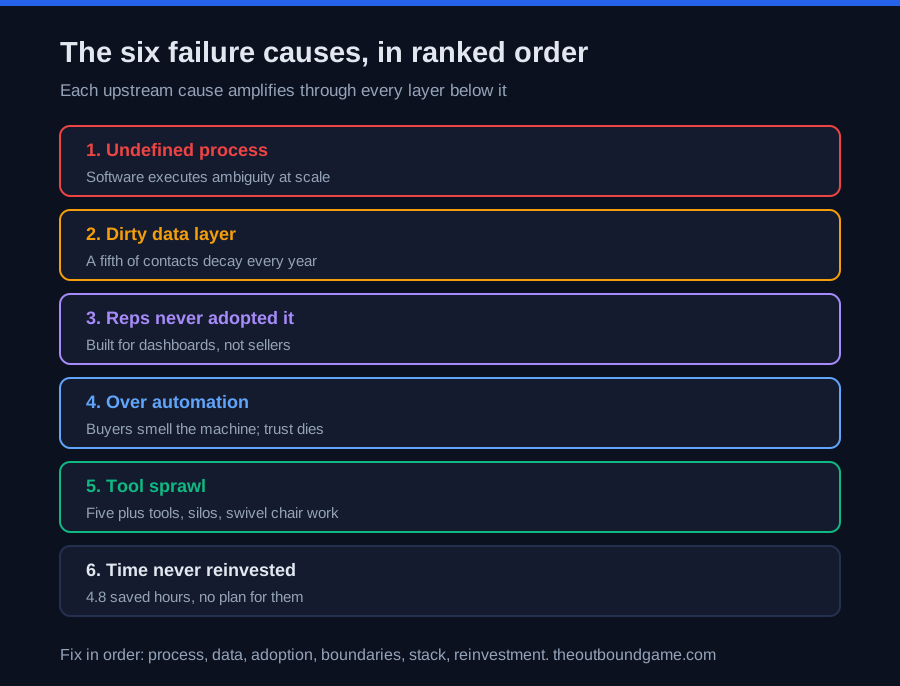
Cause one: automating a process that was never defined
The heaviest failure is the oldest one: pointing software at a sales motion nobody has written down. If lead routing rules, follow up standards, and stage definitions exist only in the heads of your two best reps, automation does not capture that judgment, it replaces it with defaults, and the machine executes ambiguity at scale. The signature is automation that technically runs while outcomes get worse: leads routed to the wrong owners faster, sequences firing at the wrong moments, and a pipeline report nobody believes.
The fix predates the tooling entirely: document the manual process, run it by hand until it produces the result you want, and only then automate the steps that are stable. The right first question, per the strongest 2026 operator guidance, is not what can AI do, but which repeated task creates bad data or delays customer contact today. Automation earns its keep on boring, proven workflows, not on aspirations.
Cause two: a dirty data layer under everything
The second cause is the one that quietly powers most of the others: crm data that cannot be trusted. B2B contact data decays at roughly a fifth or more per year as people change jobs, so a database untouched for eighteen months is materially fiction, and duplicates, missing fields, and inconsistent entries compound it. Automation built on that layer does not just misfire, it destroys trust: 88 percent of sales professionals say accurate customer data is a priority precisely because they have been burned, and once reps catch the system emailing dead contacts or double routing accounts, they stop believing every dashboard it produces.
The fix is treating hygiene as a revenue function: verification on the way in, enrichment on a schedule, deduplication as a standing job, and automated activity capture so the data enters the system without asking reps to type it. The list side of this discipline is the same one that governs outbound in how to personalize cold emails at scale, and the crm automation guide covers the plumbing that keeps records current without manual entry.
Cause three: the reps never adopted it
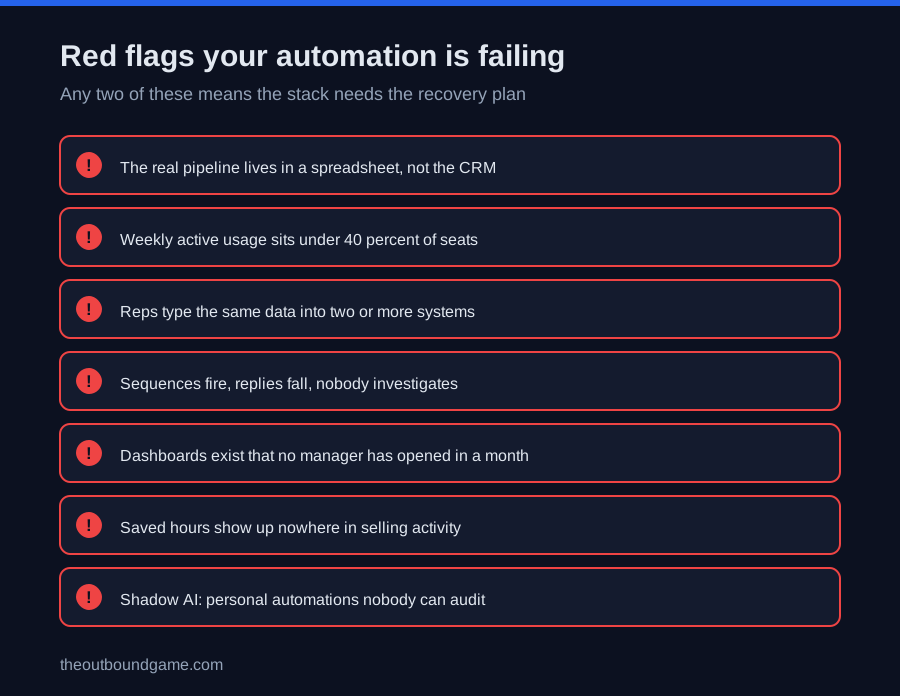
CRM project postmortems name user adoption as the leading killer, ahead of integration gaps at 17 percent and complexity at 7, and average consistent CRM usage sits near 26 percent. The structural reason, confirmed across the 2026 adoption research, is that most sales systems were built for management visibility rather than rep productivity, so sellers experience them as administrative overhead with no connection to closing. Reps resist any tool that adds a tab, a field, or a place to check before they can call a prospect, and they adopt tools that remove a step from work they already do.
The fix follows that sentence exactly: automate the logging, not the selling. Calls transcribed, emails captured, fields filled by the system, so data quality rises as a byproduct of rep behavior instead of a tax on it. Add an owner, one RevOps or operations lead accountable for the stack, peer champions instead of one all hands demo, and executive sponsors who visibly use the system themselves.
Cause four: over automation where judgment earns the money
The fourth failure is automating past the trust line. Buyers in 2026 are flooded with AI generated outreach, and they have learned to smell it: generic sequences at scale now read as spam regardless of sender quality, and the evidence from the AI SDR wave, covered honestly in do ai sdrs actually work, is that fully automated relationship building underperforms hybrid models badly. Over automation also shows up inside the building as shadow AI, reps wiring up personal, unvetted automations nobody can audit, which trades short term speed for compliance and data risk.
The fix is an explicit boundary: machines own research, enrichment, logging, scheduling, and drafting; humans own judgment calls, relationship moments, and anything a buyer will read as a signal of effort. Draw the line per workflow, write it down, and govern which tools are approved so the automation you run is the automation you chose.
Causes five and six: tool sprawl, and time savings nobody reinvests
Cause five is the stack itself. Most businesses now run five plus sales and marketing tools, integration failure is the second largest named killer of CRM projects, and every unconnected tool means swivel chair work, data silos, and one more login that decays into shelfware. The fix is subtraction before addition: map every tool in use including the free trials and browser extensions, kill overlaps, and require native integration with the CRM as a purchase gate, using the categories in best sales automation tools and the operator reviews on G2 as the shortlist filters.
Cause six is the newest and most 2026 of all: the time savings arrive and evaporate. Gartner’s May 2026 research found AI tools save sellers 4.8 hours per week on average, yet 72 percent of sales organizations report low reinvestment of those savings into higher value selling. The organizations that do redirect the hours are 2.2 times more likely to exceed customer growth goals and 3.1 times more likely to exceed conversion goals. Automation that merely creates slack produces no revenue; the fix is naming where the saved hours go, more discovery calls, faster speed to lead, deeper account research, and measuring that behavior as part of the project’s ROI, per the framework in sales automation roi.
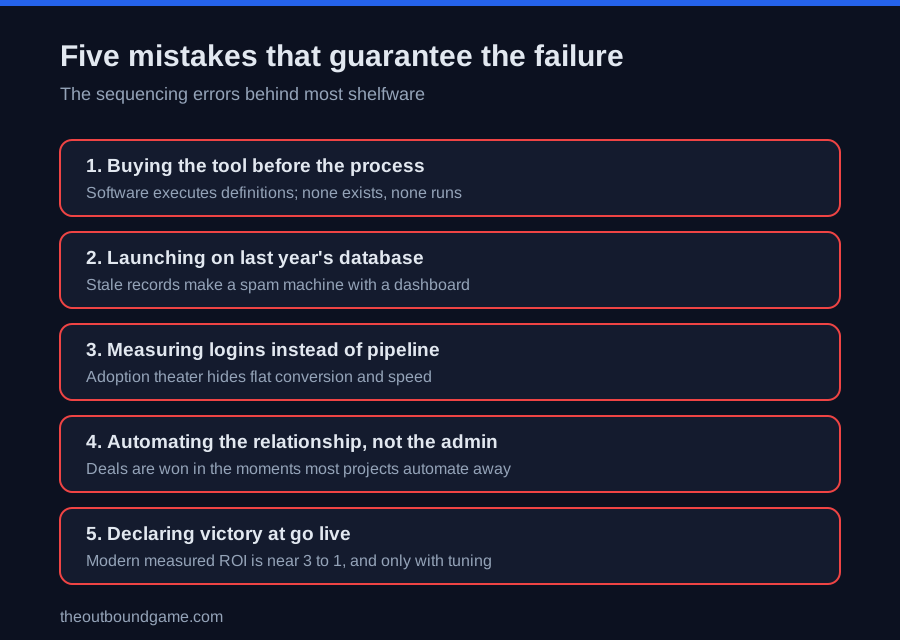
Five mistakes that explain why sales automation fails
-
Buying the tool before writing the process. Software executes definitions. If the definition does not exist, the purchase order is a donation.
-
Launching on last year’s database. With contact data decaying by roughly a fifth annually, automation on stale records is a spam machine with a dashboard.
-
Measuring logins instead of pipeline. Adoption theater, seats provisioned, dashboards opened, hides the only question that matters: did conversion and speed to lead move.
-
Automating the relationship instead of the admin. The buyer facing moments are where deals are won; the back office is where hours are lost. Most failed projects invert this.
-
Declaring victory at go live. The 2014 vintage 8.71 to 1 ROI figure still circulating is a ghost; the modern measured figure is closer to 3.10 to 1, and it accrues only to teams that keep tuning after launch.
The eight step recovery plan for a failing stack
-
Freeze new purchases. No tool enters the stack until the current one’s failure is explained in process, data, or adoption terms.
-
Write the sales motion down. Stages, routing rules, follow up standards, ownership, one page, agreed by sales and RevOps.
-
Audit the data layer. Bounce a sample, count duplicates, check field completeness, and schedule verification and enrichment as recurring jobs.
-
Map the full stack. Every tool, trial, and extension, with owners and overlaps, then cut until each remaining tool has one job and a native integration.
-
Remove typing from the rep’s day. Auto capture calls, emails, and meetings; shrink required fields to what managers actually review.
-
Relaunch one workflow. The single automation that removes the most hated manual step, measured on user adoption weekly, with a named owner.
-
Assign the saved hours. Publish where the recovered time goes, and track that activity, discovery calls, speed to lead, alongside the automation metrics.
-
Review monthly against revenue numbers, not activity numbers, expanding only from workflows that have already proven themselves in pipeline, the operating rhythm the whole b2b outbound sales system depends on.
How the failure analysis fits the broader stack
-
The technology being rescued is defined in the sales automation pillar, where the categories and capabilities live.
-
The business case that justifies the recovery work is built in sales automation roi, with the measurement framework this page’s cause six demands.
-
The proven plays worth automating first are cataloged in sales automation examples.
-
The tools that survive step four of the recovery are compared in best sales automation tools and the AI tier in best ai sales automation tools.
-
The plumbing under causes two and three is covered in crm automation, where activity capture replaces typing.
-
The workflow design discipline behind cause one lives in b2b sales workflow automation.
-
The over automation boundary of cause four is tested against evidence in do ai sdrs actually work.
-
And the orchestration layer where sequences meet judgment is mapped in sales engagement platforms, where most teams’ automation actually runs.
FAQ
Frequently asked questions
Why does sales automation fail?
What percentage of sales automation projects fail?
Why do sales reps not use the CRM?
Can you automate too much of the sales process?
How do I fix a failing sales automation stack?
What is the ROI of sales automation?
What should be automated first in sales?
The bottom line
Why sales automation fails is ultimately a sequencing story: teams buy the multiplier before building the thing worth multiplying. An undefined process, a decaying database, and an untrusting sales floor do not get fixed by software; they get amplified by it, which is exactly what the 2026 numbers show, with three quarters of leaders seeing no revenue lift and half of projects missing their goals. Run the order, process, data, adoption, boundaries, integration, reinvestment, and automation stops being shelfware and starts being the compounding asset the vendors promised: 4.8 hours a week, pointed at revenue, by a team that believes the dashboard.
Want more tested breakdowns like this? We publish one honest teardown of outbound tools, tactics, and playbooks each week. Join the newsletter.